Nolabnoparty

IT TechPills
Menu
  • Home
  • About
  • Publications
  • Virtualization
    • Omnissa
      • App Volumes
      • DEM
      • Horizon
    • Proxmox
    • VMware
      • vSphere
      • vSAN
    • Analyzer
      • Opvizor
      • Runecast
      • vRealize
      • Turbonomic
    • AWS
    • PernixData
    • StarWind
  • Backup
    • Hornetsecurity
    • Iperius
    • Micro Focus
    • Nakivo
    • RecoverPoint
    • Veeam
    • Vinchin
    • Vembu
    • vSphere Replication
  • Microsoft
    • Active Directory
    • Office 365
    • Windows Server
  • Home Lab

Nakivo v10.4: protect logins with 2FA

Paolo Valsecchi 05/10/2021 No Comments Reading Time: 2 minutes

nakivo-protect-login-with-2fa-01

To enforce security, Nakivo Backup & Replication v10.4 provides the Two-Factor Authentication (2FA) capability to prevent unauthorized access to your data protection activities.

When 2FA feature has been enabled, an additional code generated by Google Authenticator o similar apps is required to complete the login process to your Nakivo installation.


Configure Two-Factor Authentication (2FA) in Nakivo

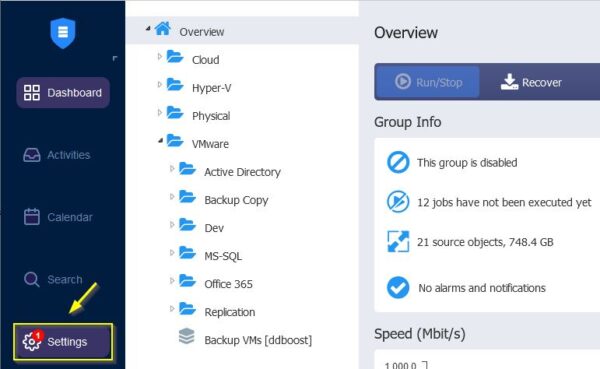
Login to Nakivo's Dashboard and click Settings.
nakivo-protect-login-with-2fa-02

Click Users and Roles option.

nakivo-protect-login-with-2fa-03

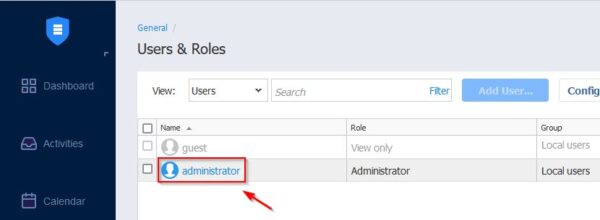
Select the user to enable 2FA.

nakivo-protect-login-with-2fa-04

To enable Two-factor authentication option an email address must be specified in the Email field.

nakivo-protect-login-with-2fa-05

Enter an email address then enable the Two-factor authentication option. Click the configure link to proceed with 2FA configuration.

nakivo-protect-login-with-2fa-06

Click Continue to configure the sign in procedure.

nakivo-protect-login-with-2fa-07

The wizard reports the previously specified email. Click change email if you wish to modify the email address set or click Continue to proceed with setup.

nakivo-protect-login-with-2fa-08

A verification code is sent to specified email address.

nakivo-protect-login-with-2fa-09

From the received email, copy the confirmation code.

nakivo-protect-login-with-2fa-10

Paste the confirmation code in Nakivo and click Verify.

nakivo-protect-login-with-2fa-11

Click the skip link if you don't want to Enter an alternative email address.

nakivo-protect-login-with-2fa-12

Install Google Authenticator or similar apps on your phone then click Continue when done.

nakivo-protect-login-with-2fa-13

Write down the code generated by the application.

nakivo-protect-login-with-2fa-14

Enter the verification code and click Continue.

nakivo-protect-login-with-2fa-15

Write down the Pairing Key to be reused in other devices. Click Continue.

nakivo-protect-login-with-2fa-16

Copy the Backup Codes needed to login if you are unable to provide a verification code. Click Continue.

nakivo-protect-login-with-2fa-17

Enter one of the backup codes received and click Finish.

nakivo-protect-login-with-2fa-18

Click Save when the Two-factor authentication has been configured successfully.

nakivo-protect-login-with-2fa-19

In the column Two-factor authentication the corresponding configured user is now shown as enabled (configured). In this example, the administrator account will need an additional code (2FA) to login to Nakivo.

nakivo-protect-login-with-2fa-20


Test 2FA login

Access the login page of your Nakivo Backup & Replication and enter the administrator credentials. Click Log in.

nakivo-protect-login-with-2fa-21

Pick the verification code from your Google Authenticator or similar app and enter the code in the appropriate field. Click Proceed.

nakivo-protect-login-with-2fa-22

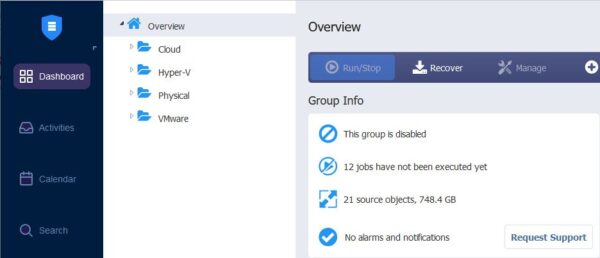
The user administrator was able to successfully log in to Nakivo.
nakivo-protect-login-with-2fa-23

Every organization should protect logins with 2FA to avoid unauthorized accesses to the infrastructure, especially to applications with the role of protecting your data such as backup software.

signature

Tweet Share Share Pin it WhatsApp Telegram

Related Posts

HPE VM Explorer 6.6 released

HPE VM Explorer 6.6 released

Veeam Vanguard 2026

Veeam Vanguard 2026

Backup Server off domain?

Backup Server off domain?

Vembu BDRSuite v5.6.0 U1 what's new

Vembu BDRSuite v5.6.0 U1 what's new

RTO vs RPO, what's the difference?

RTO vs RPO, what's the difference?

Veeam Recovery Orchestrator v7: Recovery Plans replica - pt.4

Veeam Recovery Orchestrator v7: Recovery Plans replica - pt.4

About The Author

Paolo Valsecchi

System Engineer, VCP-DCV, VCP-DM, vExpert, VMCE, VMCA, Veeam Vanguard, ACE. Working experience focused on VMware vSphere, Omnissa Horizon, Microsoft Active Directory, and Backup/DR solutions.

awards
  • English
  • Italiano

Buy Me A Coffee

Search

x linkedin youtube instagram rssita rsseng

YouTube

Subscribe to my YouTube channel


Backup, Data Protection and DR

NEWSLETTER

Get new posts by email:

PARTNERS

nakivo starwind

Categories

Archives

Most popular

  • Veeam High Availability Cluster: switchover and disassemble - pt.3
    Veeam High Availability Cluster: switchover and disassemble …
  • Veeam Backup for Microsoft 365 v8.5 released
    Veeam Backup for Microsoft 365 v8.5 released
  • Veeam Tape Library error "VBR isn't current owner"
    Veeam Tape Library error "VBR isn't current …
  • Omnissa Edge Gateway upgrade
    Omnissa Edge Gateway upgrade
  • Nakivo v11.2.1 with Proxmox VE 9.1 full support
    Nakivo v11.2.1 with Proxmox VE 9.1 full …
  • Object First Fleet Manager
    Object First Fleet Manager
  • Veeam High Availability Cluster: failover and automation - pt.2
    Veeam High Availability Cluster: failover and automation …
  • How to configure the Veeam High Availability Cluster - pt.1
    How to configure the Veeam High Availability …
  • Scaling Omnissa App Volumes Manager with Kemp load balancer
    Scaling Omnissa App Volumes Manager with Kemp …

Latest posts

  • Veeam Backup for Microsoft 365 v8.5 released
    Veeam Backup for Microsoft 365 v8.5 released
  • Veeam Tape Library error "VBR isn't current owner"
    Veeam Tape Library error "VBR isn't current owner"
  • Omnissa Edge Gateway upgrade
    Omnissa Edge Gateway upgrade
  • Nakivo v11.2.1 with Proxmox VE 9.1 full support
    Nakivo v11.2.1 with Proxmox VE 9.1 full support
  • Object First Fleet Manager
    Object First Fleet Manager
  • Veeam High Availability Cluster: switchover and disassemble - pt.3
    Veeam High Availability Cluster: switchover and disassemble - pt.3
  • Veeam High Availability Cluster: failover and automation - pt.2
    Veeam High Availability Cluster: failover and automation - pt.2
  • How to configure the Veeam High Availability Cluster - pt.1
    How to configure the Veeam High Availability Cluster - pt.1

YOUTUBE


Latest published video

About me

author My name is Paolo Valsecchi and I'm an IT Professional.

This blog is mainly focused on virtualization, data protection, VDI technologies but also covers Active Directory and Networking.

You can find detailed how-to guides, tutorials and product reviews.

View my profile on LinkedIn

Follow me

Nolabnoparty Copyright © 2026.
Advertise | All rights reserved. 
  • English
  • Italiano
This site uses cookies from Google to deliver its services, to customize ads and for traffic analyzer. If you continue browsing we consider you accept the use of cookies.